Vishal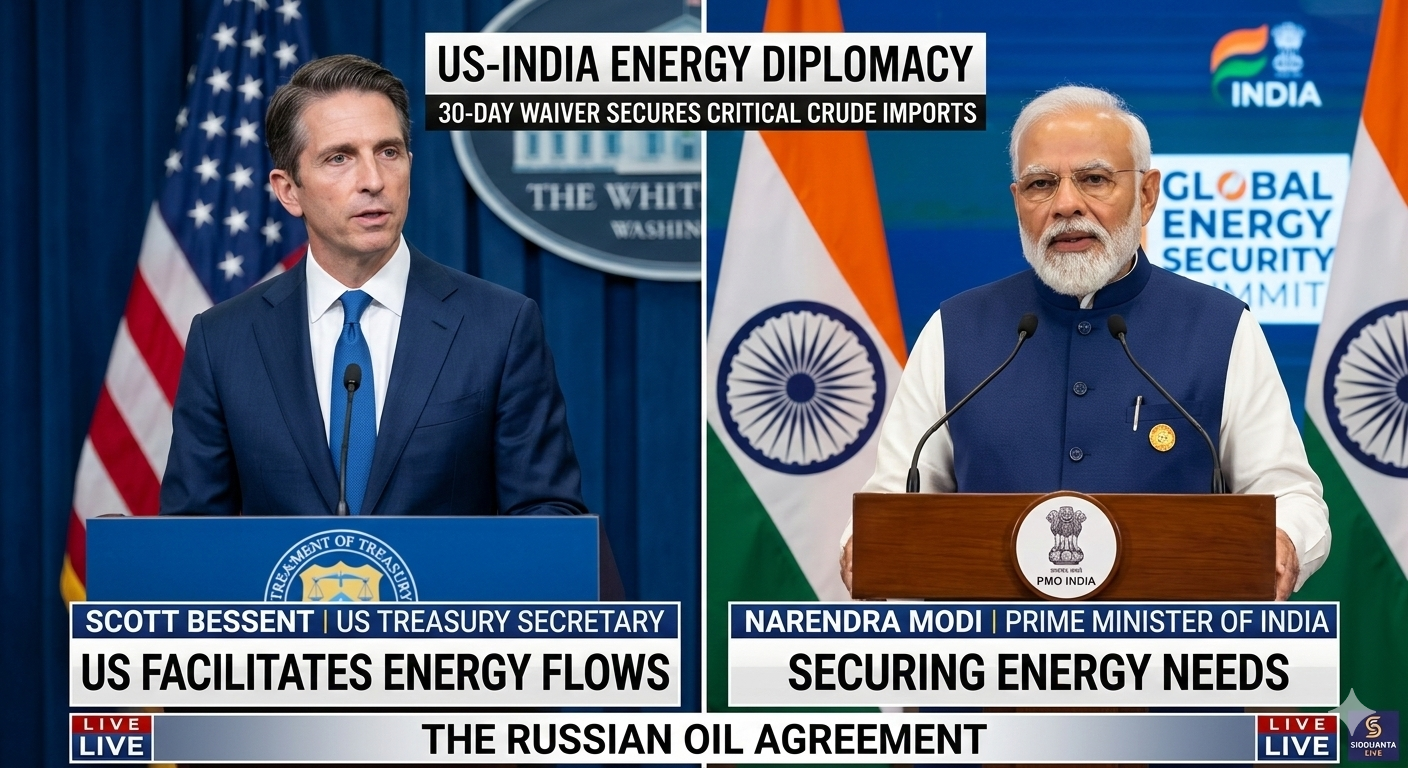
US Grants India 30-Day Russian Oil Waiver Amid West Asia War and Supply Volatility
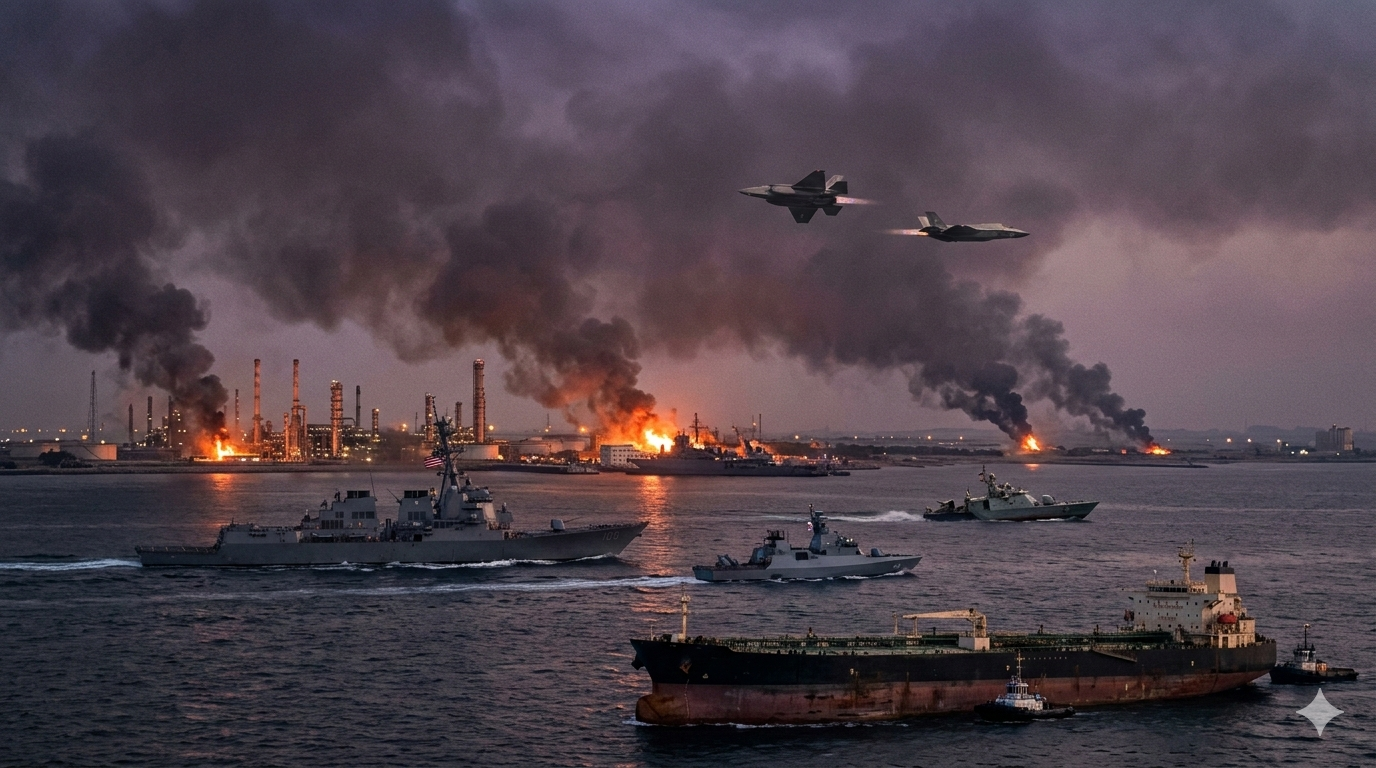
NEW DELHI / WASHINGTON — In a move reflecting the desperate state of global energy security, the United States has officially granted India a 30-day “limited waiver” to finalize the purchase and delivery of Russian crude oil. The decision comes as the conflict between the US-Israel coalition and Iran enters a critical phase, effectively choking the world’s most vital maritime energy artery.
The 30-Day “Stop-Gap” Waiver
The US Treasury Department’s Office of Foreign Assets Control (OFAC) issued the license late Thursday, authorizing transactions involving Russian Federation origin crude oil loaded on vessels on or before March 5, 2026.
Treasury Secretary Scott Bessent clarified the administration’s stance in a statement on X (formerly Twitter), noting that the measure is intended to keep “oil flowing into the global market” rather than rewarding Russia. “This deliberately short-term measure will not provide significant financial benefit to the Russian government as it only authorizes transactions involving oil already stranded at sea,” Bessent stated.
He further emphasized that Washington expects New Delhi to transition toward American energy exports in the long term, describing the waiver as a tool to “alleviate pressure caused by Iran’s attempt to take global energy hostage.”
The Iran War and the Strait of Hormuz Blockade
The waiver is a direct response to the catastrophic disruption in the Middle East. Following joint US-Israeli military strikes on Iranian infrastructure on February 28, Tehran retaliated by initiating a blockade of the Strait of Hormuz.
The Strait is a 33-kilometer-wide passage through which roughly 20 million barrels of oil per day (bpd)—approximately one-fifth of global consumption—regularly flows. With Iranian forces and proxies threatening commercial tankers, maritime insurance for the region has effectively collapsed. For India, which relies on the Persian Gulf for nearly 40% of its crude imports, the closure has turned a regional war into a domestic energy emergency.
Global Oil Market Impact and Brent Crude
The “war premium” on oil has sent shockwaves through financial hubs. Brent crude, the international benchmark, has surged past $80 per barrel, with some analysts at Goldman Sachs warning of a leap toward $100 if the blockade persists for more than four weeks.
The removal of Persian Gulf supplies has forced global logistics to shift toward the Cape of Good Hope, adding 10 to 15 days to transit times and skyrocketing operational costs. By allowing India to absorb “stranded” Russian cargoes, the US aims to prevent a total price melt-down that could trigger a global recession similar to the 2008 financial crisis.
Key Takeaways
-
Duration: A strict 30-day window (ending early April 2026).
-
Scope: Only applies to Russian oil loaded on vessels before March 5, 2026.
-
Purpose: To prevent an energy price explosion in India and the global market due to the Iran war.
-
Geopolitical Pivot: Marks a temporary softening of US pressure on India regarding Russian ties to counter the greater threat from Iran.
India’s Strategic Balancing Act
India has long maintained a policy of “strategic autonomy,” balancing its historical defense ties with Russia against its growing security partnership with the United States. While India had recently reduced Russian imports to avoid 25% US tariffs and secure a trade deal, the Iran crisis has made Russian barrels a necessity once more.
Data from Kpler shows that Russia remained India’s top supplier in February 2026, contributing roughly 1.042 million bpd. However, with West Asian suppliers like Saudi Aramco and Iraqi state oil facing transit risks, Indian state-run refiners—including IOC, BPCL, and HPCL—have been scrambling for prompt Russian cargoes to secure domestic stocks, which currently cover only about 25 days of demand.
Impact on Petrol and Diesel Prices in India
For the Indian consumer, the US waiver provides a vital cushion. Without access to these discounted Russian barrels, Indian Oil Marketing Companies (OMCs) would be forced to buy expensive spot-market crude, leading to a sharp hike in petrol and diesel prices at the pump.
While global prices remain high, the waiver allows India to maintain some level of price stability. However, experts warn that if the Strait of Hormuz remains blocked beyond the 30-day waiver period, the Indian government may face “inflationary war finance” challenges, potentially leading to a hike in retail fuel prices to offset the rising cost of procurement.
Geopolitical Analysis: A Shift in US Policy?
The waiver highlights a pragmatic shift in the “Trump 2.0” energy agenda. By allowing the sale of Russian oil already at sea, the US is essentially using Russian supply to blunt the impact of Iran’s “energy hostage” tactics. It signals that, for now, the containment of Iran is a higher priority for Washington than the total isolation of Russian energy.
However, the “short-term” nature of the waiver serves as a warning to New Delhi: the US expectation remains a total pivot toward American and “friendly” energy sources once the immediate crisis subsides.
Conclusion
The 30-day waiver is a rare moment of geopolitical alignment where US, Indian, and even (indirectly) Russian interests meet to prevent a global energy collapse. As the Iran war continues to redefine trade routes and security alliances, India’s ability to navigate this “oil diplomacy” will be the ultimate test of its strategic resilience.
FAQ Section
Q1: What exactly does the 30-day US waiver allow India to do? It allows Indian refiners to pay for and receive Russian crude oil that was already loaded onto ships before March 5, 2026, without facing US sanctions or tariffs for that specific period.
Q2: Why did the US issue this waiver now? The blockade of the Strait of Hormuz by Iran has removed 20 million barrels of oil from the daily market. The US issued the waiver to prevent a global oil price spike and ensure energy stability for India, a key partner.
Q3: Will this waiver help lower petrol prices in India? It won’t necessarily lower prices, but it prevents them from skyrocketing. By allowing India to access Russian oil already in transit, it reduces the need to buy much more expensive oil from other disrupted sources.
Q4: Does this mean the US is okay with India buying Russian oil forever? No. Treasury Secretary Scott Bessent explicitly called this a “stop-gap measure” and stated that the US expects India to increase its purchases of American energy in the future.
Q5: What happens after the 30 days are over? Unless the waiver is extended, Indian refiners will again face sanctions or punitive tariffs if they continue to purchase Russian oil, particularly if it violates the price caps or trade agreements set by the US.
Read Also:-

Taliban-Pakistan Border Clashes Escalate After Airstrikes: Rising Tensions Threaten Regional Stability

Narendra Modi 75: Celebrating a Transformative Leadership Ram Mandir, Article 370 & Beyond