Vishal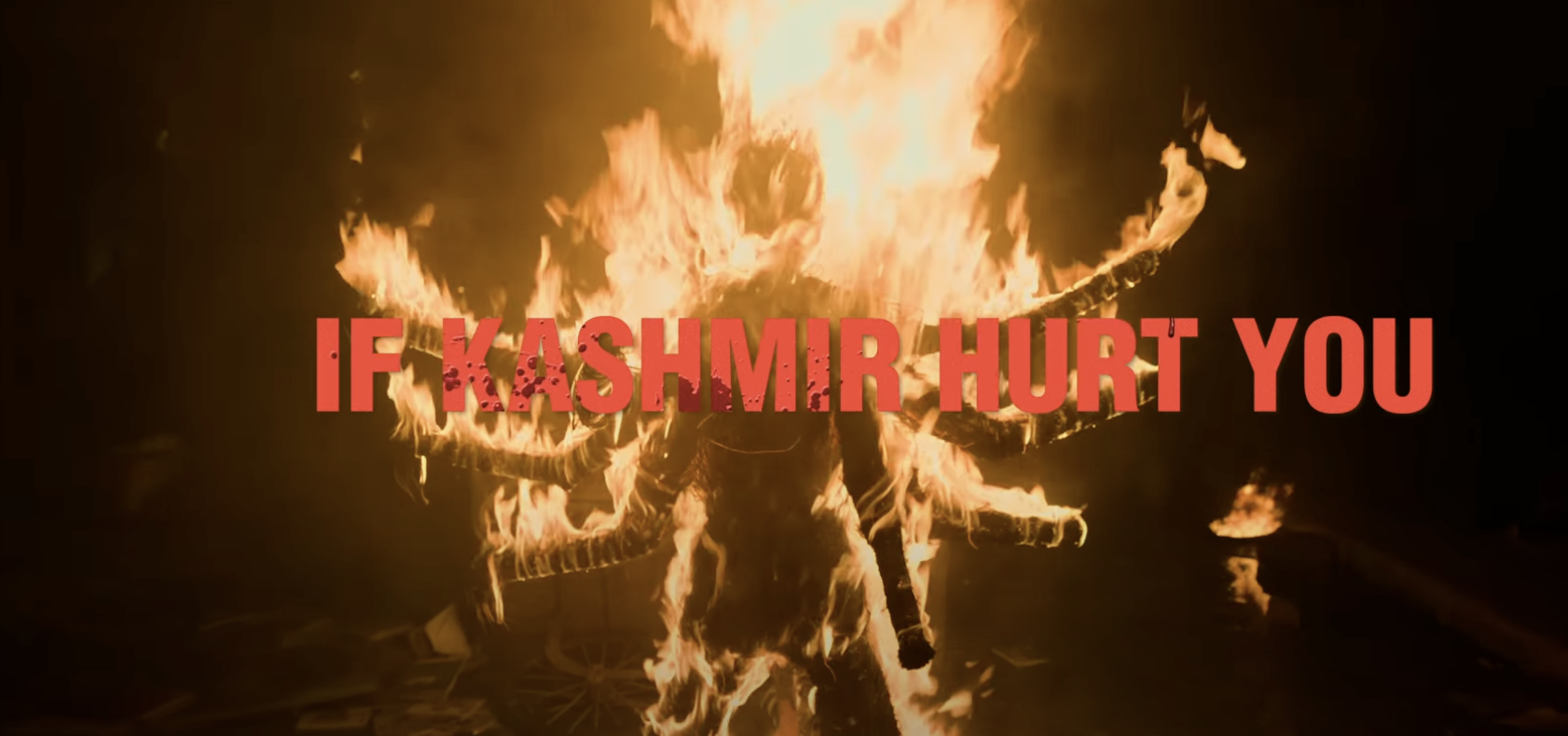
The trailer for “The Bengal Files” is not just a collection of scenes; it is a profound and unsettling journey into a painful chapter of history that demands to be remembered.
From its opening moments to its chilling conclusion, the film promises to be a powerful and unflinching exploration of the 1946 Direct Action Day and its devastating aftermath.
The trailer sets a disturbing tone right from the start.
We are introduced to a conversation between two characters, one of whom, played by Saswata Chatterjee, provocatively suggests to Darshan Kumar that a boy named Taimur becoming India’s youngest Prime Minister would be a positive development.
This seemingly innocuous line serves as a stark, modern-day counterpoint to the historical turmoil that is about to unfold, immediately framing the narrative as a story of a divided past with echoes in the present.
The boldest trailer that leaves its mark on everyone.#TheBengalFiles
Releasing Worldwide on 5th September 2025. pic.twitter.com/cnNec3piVN— Vivek Ranjan Agnihotri (@vivekagnihotri) August 19, 2025
The visual narrative then plunges us into the heart of the horror.
Haunting newspaper clippings flash across the screen, detailing the horrors of Direct Action Day.
The scene that follow are graphic and visceral: scenes of Hindus being mercilessly executed on the streets, their bodies falling in heaps.
The brutality is depicted with a raw, shocking honesty that is difficult to turn away from.
The conversation between Gandhi and Jinnah is a pivotal and emotionally charged scene in the film, effectively capturing the ideological chasm that ultimately led to the partition of India.
The moment is a masterclass in historical tension, laying bare the profound philosophical differences that fueled the communal fire. Anupam Kher’s portrayal of Gandhi is one of serene conviction.
He speaks with a soft but firm voice, articulating the belief that Indian Muslims are, in essence, descendants of converted Hindus, a shared ancestry that should bind them together.
His words reflect a vision of a unified India, a tapestry of diverse faiths woven from a common thread of history.
In stark contrast, Jinnah’s retort is swift and unyielding.
The dialogue, “You believe in the Vedas, we believe in the Quran; you believe in lakhs of gods, and we believe in only Allah,” cuts through Gandhi’s vision of unity.
Jinnah’s words are not just a political statement but a theological one, drawing an uncrossable line between the two communities. This exchange is not merely a debate about land or power; it is a fundamental disagreement about identity itself.
It highlights the core incompatibility of their respective visions for the future, one rooted in spiritual synthesis and the other in distinct religious nationhood.
This scene brilliantly demonstrates how a deep-seated philosophical divide could escalate into unimaginable violence.

The trailer doesn’t shy away from confronting the audience with the raw, unfiltered horrors of those dark days, laying bare the dehumanizing savagery of the events.
One of the most gut-wrenching moments arrives in the form of a seemingly small yet symbolically colossal act: a character, with chilling nonchalance, wipes the sacred sindoor from a woman’s forehead using his foot.
This brutal gesture, simple in its execution yet devastating in its implication, is more than just physical desecration it is the trampling of her dignity, her identity, and her very existence.
To witness such a moment is to feel one’s soul shudder, for it represents the stripping away of humanity in the most visceral manner possible.
But the film does not stop there.
It drags the viewer deeper into the abyss of cruelty, refusing to offer even a momentary respite.
Almost immediately, the screen transforms into an image of unrelenting despair: the streets, once filled with life and laughter, are now reduced to an open graveyard, littered with the lifeless bodies of Hindus.
Above them, vultures and eagles circle menacingly, their dark wings casting shadows on the ground as they wait to descend and feast on the dead.
The silence of the scene is deafening, broken only by the haunting cries of the scavengers a reminder that even in death, dignity is denied.
The viewer is left with an ache that is not easily shaken off, a deep-seated unease that lingers long after the images fade from the screen.
This is not just cinema it is a mirror held up to the darkest recesses of human cruelty, a visceral punch to the gut that leaves an indelible scar on the conscience of anyone who dares to look.

The Rise of a Defender: Gopal Patha’s Glimpse of Defiance
Amidst the overwhelming scenes of suffering and chaos depicted in the trailer for “The Bengal Files,” the character of Gopal Patha emerges as a powerful symbol of defiance and resistance.
The scene, his face streaked with blood and his expression a primal roar of fury and pain, is arguably the most visceral and impactful shot in the entire trailer.
It is a moment that perfectly encapsulates the brutal reality of the violence while also hinting at the courage that rose in response to it.
The scene shown here is not just an act of violence but a transformative moment for the character.
The blood on his face is not his own but that of others, perhaps an act of vengeance or a desperate struggle to protect those around him.
It is a visual representation of the horrors he has witnessed and the burden he now carries. His wide, almost manic eyes and open-mouthed scream are a fusion of rage and sorrow the grief of seeing his community torn apart, and the fury that ignites his fight.
This is a man who has been pushed to his absolute limit, and in that moment, he transforms from a victim into a protector.
Gopal Patha’s character represents the desperate, courageous efforts of individuals who refused to stand by and watch their community be annihilated.
In a narrative dominated by scenes of helpless victims and the callousness of attackers, his rise as a beacon of resistance is a crucial element of the story.
The trailer hints that he is a figure who, despite the overwhelming odds, takes up arms to defend his people, providing a semblance of hope in a world plunged into darkness.
He is the embodiment of the human spirit’s refusal to be broken, the personification of the will to survive and fight back when all else seems lost.
His presence in the trailer promises a nuanced exploration of resistance and the moral complexities that arise in a time of communal strife. He is not just a character; he is a historical figure whose story of defiance serves as a harrowing reminder of the courage that can be found in the darkest of times.
Read Also:-
The Bengal Files Teaser – A Visceral Journey Through Forgotten Wounds
The dialogue “Zameen ka tukda nahi, India ka lighthouse hai Bengal” is delivered with a profound sorrow that will undoubtedly resonate with audiences.
It is a powerful lament, a cry that captures the immense emotional and historical weight of what was lost. The line transforms the tragedy from a mere regional conflict into a national catastrophe.
Darshan Kumar’s character, Krishna, appears to be the audience’s guide through this dark period. His room, plastered with old newspaper clippings, suggests a man obsessed with uncovering the truth behind Direct Action Day.
This quest for answers provides the film with its central investigative thread, promising a narrative that is as much a historical retelling as it is a personal journey of discovery.

A Scream for a Lost Community: The Tragic Cry of Bharti
The scene of a woman named Bharti, her face smeared with blood and her expression a mix of sheer terror and abject helplessness, is a powerful visual that encapsulates the raw, unadulterated anguish of a community under siege.
In this pivotal moment, Bharti is not just screaming; she is letting out a primal, guttural cry of “Amar” (or “Amarrrrr!”).
This is not just a name; it is a desperate plea, a final, desperate act of a soul being ripped apart by sorrow.
The blood on her face, possibly her own or that of a loved one, signifies a personal tragedy that mirrors the collective catastrophe. Her wide, desperate eyes reflect a profound shock and an unanswerable question: how could such a horror befall them?
This scene is a microcosm of the larger violence. Bharti’s scream is not an act of defiance but an expression of profound, soul-deep grief.
It is the sound of a person whose world has been shattered, whose hope has been extinguished, and who is left with nothing but the echo of her own pain.
The word “Amar,” repeated in a scream, carries the weight of a broken promise, a lost life, and the memory of a love that has been snatched away.
The background of the scene with blurred figures and the flickering light of a fire adds to the sense of chaotic urgency and despair. It feels like a moment suspended in time, where a single, haunting scream becomes the soundtrack to a community’s final moments of dignity and life.
Through Bharti’s raw and vulnerable portrayal, the film promises to not just tell a story of historical events but to make the audience feel the personal, unbearable pain of those who lived through them.
Her scream is a testament to the fact that behind the statistics and historical accounts, there are real people who lost everything. It is a moment that will linger in the minds of viewers long after the trailer ends.

The final, searing message “If Kashmir hurt you, Bengal will haunt you” serves as a gut-wrenching warning, connecting two profound historical traumas and leaving the audience with a sense of lingering unease.
A Profound Inquiry: Mithun Chakraborty’s Final Question
The appearance of Mithun Chakraborty, a venerable and commanding presence, marks the perfect finale to the emotionally charged preview.
He is shown in a room filled with what appear to be old newspapers and documents, holding a sacred thread or a colorful garland, perhaps a symbol of a lost culture or a forgotten ritual.
His weary but wise eyes seem to hold the weight of decades of history as he looks at Darshan Kumar’s character.
The dialogue he delivers is not a statement but a fundamental question: “Who are we, the people of Bharat?” This single line resonates with immense historical and existential weight.
It is a question that cuts through the political rhetoric, the religious divides, and the gruesome violence to reach the very core of national identity. It forces the audience to confront not only the events of Direct Action Day but also the long-term consequences of that trauma on the collective psyche of a nation.
Mithun Chakraborty’s character is a guardian of memory, a figure who has lived through the chaos and now seeks to make sense of it all. He is the voice of a generation that witnessed the horrors of partition and is now asking a new generation to understand its legacy.
The question is a call to remembrance, a demand to understand the shared history, both good and bad, that defines the people of India.
It challenges the audience to look beyond the superficial differences and seek a deeper, more unifying truth.
By posing this question, the film’s scope widens dramatically, becoming not just a story about a historical tragedy but a timeless meditation on identity, belonging, and the enduring quest to define what it means to be a citizen of India.
His presence and his final question ensure that “The Bengal Files” will be a film that sparks conversation, reflection, and a deep-seated desire to understand the past in order to comprehend the present.

The trailer shows this is not just a film but a Yagya for it’s director Vivek Ranjan Agnihotri.
It is a declaration that the film is not merely a piece of art but a sacrificial act of truth-telling, a sacred ritual to honor the memory of those who suffered and died.
“The Bengal Files” promises to be a harrowing, necessary, and deeply moving cinematic experience. It is a testament to the fact that some stories must be told, no matter how difficult they are to witness.
This is a film that will not just inform but will haunt, provoke, and demand an accounting of history’s most painful truths.