Vishal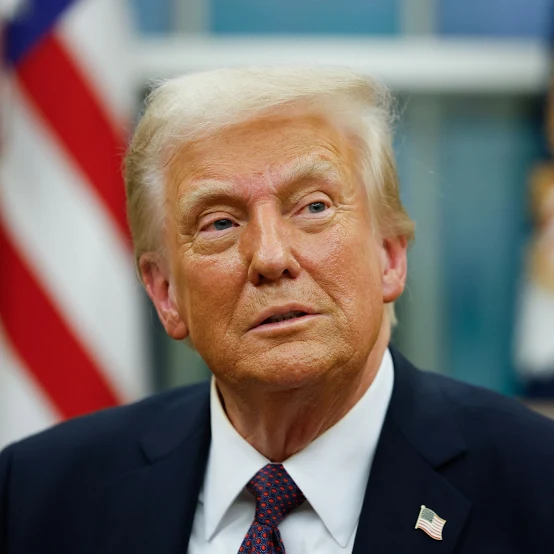
On 10 October 2025, the Norwegian Nobel Committee announced a decision that reverberated across the political landscape of Latin America and beyond: María Corina Machado, a prominent Venezuelan opposition leader, was awarded the Nobel Peace Prize.
Her selection is being heralded not only as recognition for her persistent fight for democratic freedoms in Venezuela, but also as a symbolic reaffirmation of global solidarity against authoritarianism.
In a striking gesture, Machado dedicated her prize to the “suffering people” of Venezuela and extended gratitude to former U.S. President Donald Trump for what she described as his “decisive support” for her cause.
This dual dedication has sparked intense debate, given the polarized political personas involved and the complex geopolitical dynamics at play.
In this article, we delve into the background that led to her award, her reactions, Trump’s role in the narrative, and the echoes this decision may have across the region and the world.
The Road to the Nobel: Machado’s Struggle & Achievements
Early Life and Political Roots
María Corina Machado was born in Caracas in 1967 and trained as an industrial engineer. Over time, she became a high-profile critic of Venezuela’s ruling governments, positioning herself as one of the leading voices for change in a context marked by economic collapse, institutional decay, and political repression. Reuters
Her political evolution was shaped not only by ideology but by the urgency of Venezuela’s crisis — hyperinflation, severe shortages, mass migration, and a crackdown on civil liberties have made her resistance a rallying point for many disaffected Venezuelans.
The Nobel Committee talks about peace. President @realDonaldTrump makes it happen.
The facts speak for themselves. President #Trump deserves it.#PeaceThroughStrength https://t.co/hnvyfy2TaN— Prime Minister of Israel (@IsraeliPM) October 10, 2025
The Blocked Candidacy and Hiding from Repression
In 2023, Machado emerged as the favorite in the opposition primary for the 2024 presidential election. But the electoral authorities and pro-government judiciary forbade her from running, citing various legal and administrative restrictions. The Federal
In the past year, #NobelPeacePrize laureate Maria Corina Machado has been forced to live in hiding. Despite serious threats against her life she has remained in the country, a choice that has inspired millions of people.
When authoritarians seize power, it is crucial to… pic.twitter.com/GA3C7asz4Y
— The Nobel Prize (@NobelPrize) October 10, 2025
Following a contested election in which her ally Edmundo González was declared the winner by the opposition (a result rejected by the Maduro regime), Machado went into hiding. The government’s widespread repression, arrests of opposition figures, and a climate of fear made public activism perilous. Reuters
Despite this, she continued to coordinate resistance, issue declarations, and consistently press for international pressure on Nicolás Maduro’s administration.
The Nobel Committee’s Decision & Rationale
When awarding the prize, the Norwegian Nobel Committee described Machado as a “brave and committed champion of peace” who has kept “the flame of democracy burning during a growing darkness.” NobelPrize.org
Their citation recognized her tireless work in promoting democratic rights and aspiring to a “just and peaceful transition from dictatorship to democracy.” AP News
In choosing Machado, the committee has clearly signaled a preference for recognizing grassroots resistance against authoritarian regimes.
The award comes at a moment when democracy itself is under stress in multiple regions — making her selection not only a Venezuelan moment but a broader symbol.
Machado’s Response: Dedication, Gratitude, and Forward Strategy
Upon learning of her prize, Machado expressed astonishment and deep humility. News reports indicate she was “in shock” yet composed, recognizing that this honour transcends her personal role and belongs to the Venezuelan people. euronews
On social media, she declared:
“This recognition of the struggle of all Venezuelans is a boost to conclude our task: to conquer Freedom.”
“We are on the threshold of victory… today, more than ever, we count on President Trump, the people of the United States, the peoples of Latin America, and the democratic nations of the world as our principal allies…”
She also explicitly dedicated the award to those enduring hardships inside Venezuela — and to Donald Trump for what she described as his “decisive support” for her cause. The Federal
This gesture underscores how intertwined her struggle has become with global actors, particularly in the U.S., which continues to exert influence over Venezuela’s crisis.
This recognition of the struggle of all Venezuelans is a boost to conclude our task: to conquer Freedom.
We are on the threshold of victory and today, more than ever, we count on President Trump, the people of the United States, the peoples of Latin America, and the democratic…
— María Corina Machado (@MariaCorinaYA) October 10, 2025
The Trump Factor: Ambition, Expectations, and Reaction
Trump’s Nobel Aspirations
Donald Trump had publicly campaigned to be awarded the Nobel Peace Prize, claiming numerous diplomatic achievements and ceasefire brokering roles. His supporters in the U.S. and abroad frequently insisted he “deserves” the prize. euronews
Some of his claims included involvement in conflicts in Gaza, India-Pakistan tensions, and other global flashpoints. However, analysts largely viewed many of these assertions as exaggerated or unverified.
Reaction from the White House and Political Circles
Following the Nobel announcement, the White House criticized the Nobel Committee’s decision, accusing it of favoring “politics over peace.” A spokesperson said that Trump would “continue making peace deals, ending wars, and saving lives.” The Guardian
Some of his backers expressed dismay, arguing that his diplomatic maneuvers deserved recognition. Others, including foreign leaders who had nominated Trump, voiced disappointment. Newsweek
Symbolism & Geopolitics
By awarding Machado and highlighting her thanks to Trump, the Nobel Committee places Trump in a complicated spotlight: he is acknowledged as a supportive actor in the Venezuelan cause, yet excluded from the prize itself.
For Venezuela, this dynamic allows the opposition to align with a powerful external patron (Trump/the U.S.) without making the Nobel decision purely politically driven.
Some critics suggest that Machado’s expressed gratitude addresses potential backlash or misinterpretations — reinforcing that her struggle is homegrown and fundamentally about Venezuelan agency.
Implications & Challenges Ahead
For Venezuela
-
Moral Boost & Legitimacy: The Nobel Prize elevates Machado and her movement to a global stage, potentially strengthening internal morale and international support.
-
Pressure on Maduro: This recognition adds diplomatic weight to calls for free elections, human rights, and accountability.
-
Security Risks: Machado’s visibility could attract further repression attempts; her safety remains precarious.
-
Transition Planning: The opposition faces the difficult task of mapping realistic pathways toward political change, especially given entrenched state control and international alliances backing Maduro.
For Latin America & Global Democracy
-
Machado’s award underscores a pattern: the Nobel Committee has repeatedly honored individuals resisting authoritarianism (not just diplomats or statesmen). This trend affirms the legitimacy of grassroots democracy defenders.
-
The decision intensifies scrutiny on governments with weakening democratic institutions, especially in the era of rising populism.
-
It may inspire similar movements across the region, offering a model of resilience and international solidarity.
For U.S.–Venezuela Relations
-
Machado’s explicit appreciation for Trump signals openness to deeper engagement, but also complicates optics in U.S. politics.
-
The U.S. may face increased calls to align policy more strongly with Venezuelan opposition demands, including sanctions, diplomatic pressure, or more direct involvement.
-
However, such alignment must navigate risks of being perceived as interference or neocolonial overreach.
Criticisms & Counterpoints
No Nobel laureate is free from critique — Machado’s inclusion of Trump in her dedication has attracted criticism from those who argue:
-
It politicizes a prize meant for impartial recognition.
-
She potentially alienates more left-leaning or neutral actors who oppose Trump’s broader policies.
-
The alliance with a highly polarizing figure might limit her ability to build broad coalitions across Venezuelan sectors.
On the flip side, supporters argue:
-
Her acknowledgment of external support does not diminish Venezuelan agency; it recognizes the real influence of global actors.
-
In extreme contexts of repression, strategic alliances are sometimes necessary to leverage broader attention and pressure.
-
The Nobel Committee made its decision on criteria of democracy defense, not U.S. politics.
María Corina Machado’s Nobel Peace Prize carries profound significance. It is a tribute to generations of Venezuelans who have strained under economic collapse and authoritarian rule.
It is also a message: the international community is watching, and it honors those who resist. Her dedication to the people of Venezuela and nod to Donald Trump places this victory at the crossroads of national struggle and global geopolitics.
Yet the road ahead is uncertain. Symbols matter, but change requires systems, consensus, strategic planning, and sustained pressure.
For Machado and her allies, this accolade is both an affirmation and a challenge: to transform recognition into meaningful progress for democracy and human dignity.