Vishal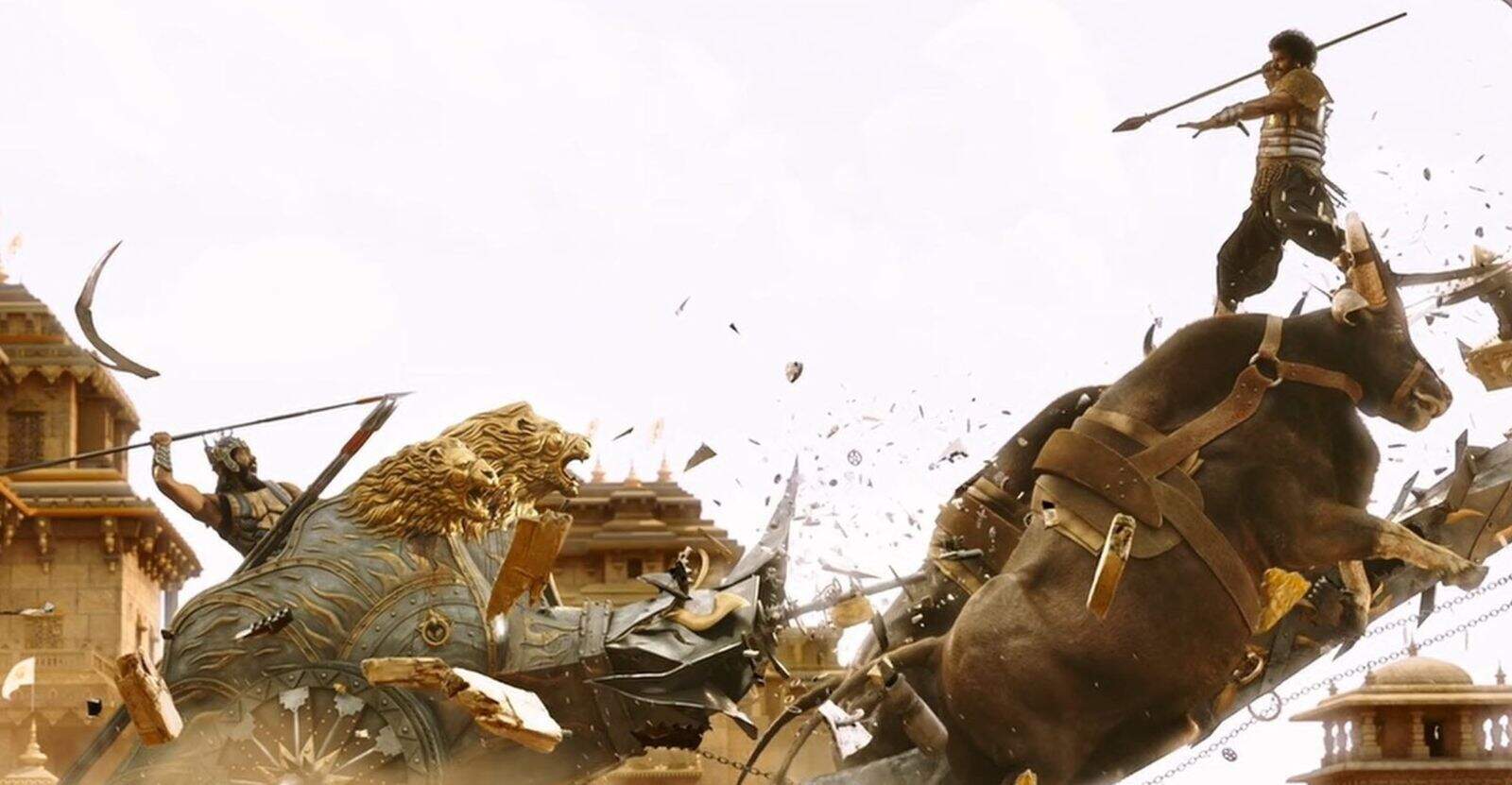
July 10, 2025, marks a decade since the cinematic landscape of India was irrevocably altered with the release of S.S. Rajamouli’s magnum opus, Baahubali: The Beginning. More than just a film, Baahubali became a cultural phenomenon, shattering long-standing industry norms and ushering in a new era of ambition, unity, and global recognition for Indian cinema.
Before Baahubali, the Indian film industry was largely fragmented by regional languages, with Bollywood often dominating the national narrative.
South Indian cinema, while producing critically acclaimed and commercially successful films within their respective states, rarely achieved widespread pan-Indian appeal.
Baahubali changed all of that, proving that a compelling story, coupled with unparalleled vision and execution, could transcend linguistic boundaries and captivate audiences across the length and breadth of the nation.
Breaking the Language Barrier: A Pan-Indian Phenomenon
One of Baahubali‘s most significant achievements was its seamless integration across multiple languages.
Released simultaneously in Telugu, Tamil, Hindi, and Malayalam, the film wasn’t merely dubbed; it was marketed and presented as a grand, singular cinematic event for all of India.
This multi-lingual release strategy was a game-changer. Suddenly, audiences in Mumbai, Delhi, Kolkata, and beyond were flocking to theaters to watch a Telugu film, a concept almost unthinkable before.
This success demonstrated that audiences were hungry for quality content, irrespective of its origin language.
It proved that a well-told story, with universal themes of heroism, sacrifice, and justice, could resonate with anyone, anywhere.
This paved the way for the “pan-Indian film” trend, inspiring a new generation of filmmakers to think beyond their regional markets and aim for a national, and even international, audience.
A Merger of North and South: Uniting Indian Audiences
Baahubali acted as a powerful unifier. For years, the Indian film industry operated in distinct silos – Bollywood in the North, Tollywood, Kollywood, Mollywood, and Sandalwood in the South.
While there was appreciation for individual talents, a true cross-pollination of audiences and mainstream acceptance was rare.
Baahubali‘s unprecedented success created a shared cinematic experience. Discussions about “Why did Katappa kill Baahubali?” transcended state borders, becoming a national obsession. This shared excitement fostered a sense of collective ownership over the film, blurring the lines between “Bollywood films” and “South Indian films.”
It showed that Indian audiences, despite their diverse linguistic and cultural backgrounds, could come together to celebrate a truly grand spectacle.
This unity was not just about box office numbers; it was about fostering a deeper appreciation and respect for the rich cinematic traditions across India.
Raising the Bar: Visuals, Storytelling, and Ambition
Beyond its cultural impact, Baahubali also set new benchmarks for technical brilliance and storytelling in Indian cinema.
The film’s breathtaking visual effects, epic action sequences, and intricate world-building were on par with international standards, proving that Indian filmmakers could compete on a global scale.
This inspired a surge in production values and a willingness to invest more in scale and spectacle.
Furthermore, the film’s narrative, while steeped in Indian mythology and folklore, was universally accessible.
It showcased the power of strong character arcs, emotional depth, and gripping plotlines. Rajamouli’s vision demonstrated that mass appeal didn’t have to come at the cost of intelligent storytelling.
A Special Mention: V. Vijayendra Prasad, the Master Storyteller
No discussion about Baahubali‘s success is complete without a special mention of V. Vijayendra Prasad, the prolific screenwriter and father of S.S. Rajamouli.
While Rajamouli brought the grand vision to life, it was Prasad’s intricate storytelling that laid the foundation. He is the mastermind behind the captivating narrative, the compelling characters, and the epic scope that made Baahubali so impactful.
Vijayendra Prasad’s ability to weave complex mythological elements with universal human emotions, crafting a narrative that was both grand and relatable, was instrumental to the film’s success.
His rich imagination and deep understanding of Indian storytelling traditions provided the bedrock upon which the entire Baahubali phenomenon was built. Beyond his monumental contribution to the Baahubali saga, he has consistently proven his mettle as a master storyteller across various languages and genres.
His impressive filmography includes scripting the heartwarming and critically acclaimed Hindi blockbuster 2015’s Bajrangi Bhaijaan, the historical drama 2019’s Manikarnika: The Queen of Jhansi, the biographical film 2021’s Thalaivii, and the globally acclaimed action epic 2022’s RRR.
Other notable works include Magadheera (2009), Rowdy Rathore (2012), and Mersal (2017), among many others.
His consistent success in delivering captivating narratives that resonate with diverse audiences further cements his legacy as one of Indian cinema’s most influential and versatile writers.
The Return of an Epic: Baahubali: The Epic
As the excitement for the 10th anniversary of Baahubali: The Beginning reaches a fever pitch, fans have another reason to rejoice. S.S. Rajamouli himself announced a special cinematic event to commemorate this milestone:
“Baahubali… The beginning of many journeys. Countless memories. Endless inspiration. It’s been 10 years. Marking this special milestone with #BaahubaliTheEpic, a two-part combined film. In theatres worldwide on October 31, 2025.”
Baahubali…
The beginning of many journeys.
Countless memories.
Endless inspiration.
It’s been 10 years.Marking this special milestone with #BaahubaliTheEpic, a two-part combined film.
In theatres worldwide on October 31, 2025. pic.twitter.com/kaNj0TfZ5g
— rajamouli ss (@ssrajamouli) July 10, 2025
This re-release, combining both Baahubali: The Beginning and Baahubali 2: The Conclusion into a single, seamless narrative, offers a unique opportunity for both ardent fans and new audiences to experience the entire saga as one grand, uninterrupted masterpiece.
It’s a chance to relive the magic, the grandeur, and the emotional journey of Mahishmati and its valiant heroes on the big screen once again. This initiative further solidifies Baahubali‘s enduring legacy and its continued role as a beacon of cinematic excellence in India.
The Enduring Legacy
Ten years on, Baahubali: The Beginning remains a landmark achievement. It didn’t just break box office records; it broke barriers of language, united a diverse audience, and inspired a paradigm shift in Indian filmmaking.
It demonstrated that with a compelling vision, a dedicated team, and a truly epic story, Indian cinema has the power to captivate the world, proving that boundaries are merely illusions when creativity knows no bounds.
The “Baahubali effect” continues to resonate, empowering filmmakers to dream bigger and pushing the boundaries of what Indian cinema can achieve.
Read Also:- Rohit Sharma: The Maestro Weaving Emotions Through Melody in Indian Cinema and OTT