Vishal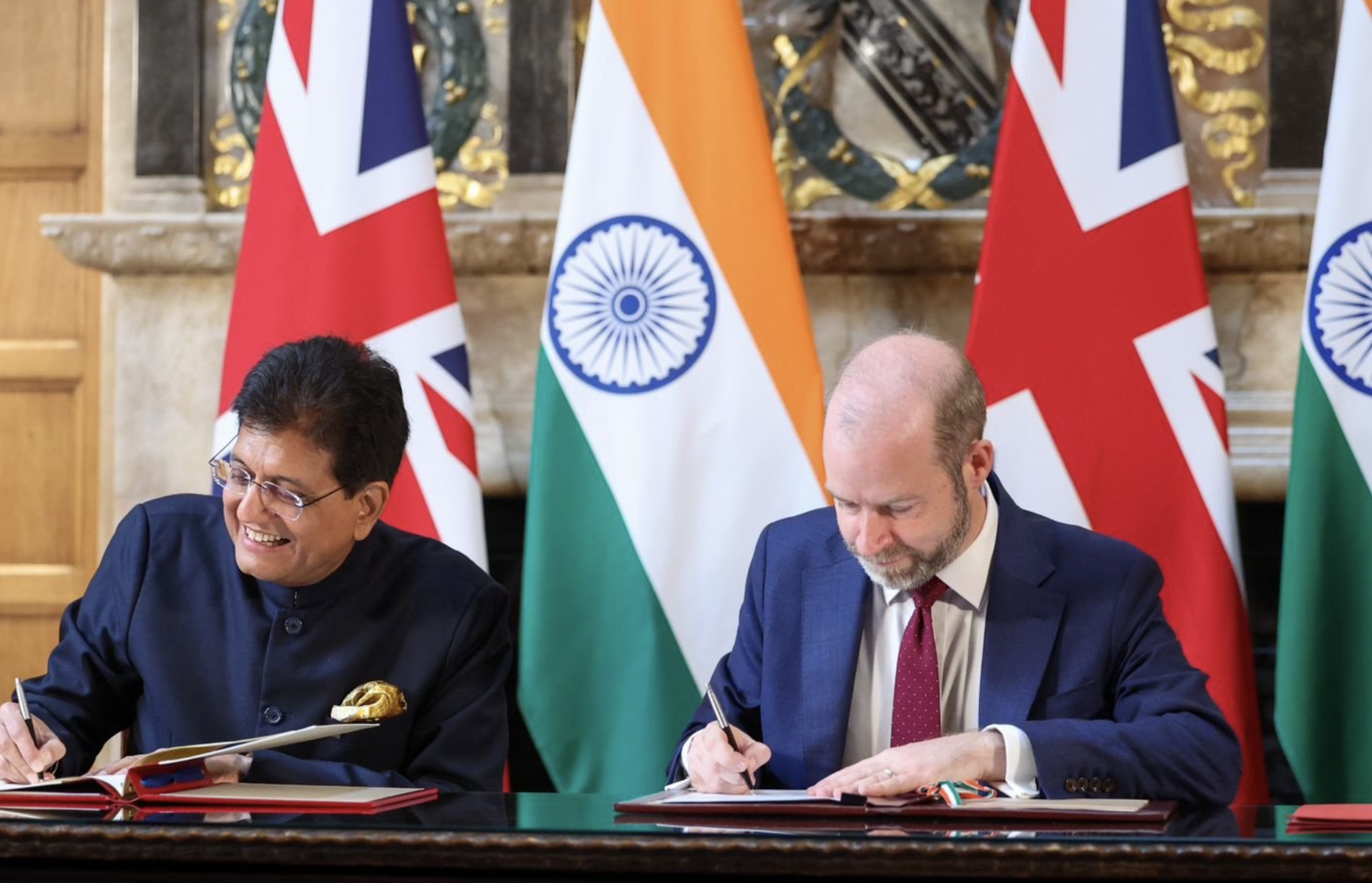
The recently signed India-UK Free Trade Agreement (FTA) marks a historic milestone in bilateral trade relations, unlocking new opportunities for businesses and consumers in both nations.
After years of negotiations, the deal was finalized on July 24, 2025, during Prime Minister Narendra Modi’s visit to the UK.
The agreement is set to boost bilateral trade by $34 billion annually, with significant benefits for key Indian sectors such as textiles, marine products, footwear, and gems & jewellery, while also reducing tariffs on UK automobiles, whisky, and aerospace products.
This comprehensive trade pact covers 27 chapters, including goods, services, digital trade, intellectual property, and even a dedicated gender equality chapter a first for India.
Let’s explore the key highlights, sector-wise gains, and potential economic impact of this landmark deal.
Unlocking New Opportunities: A Deep Dive into the India-UK Free Trade Agreement
The recently negotiated Free Trade Agreement (FTA) between India and the United Kingdom marks a pivotal moment in bilateral trade relations, poised to unlock unprecedented opportunities for businesses and consumers in both nations.
This comprehensive pact goes beyond traditional tariff reductions, encompassing critical areas like services, investment, and inclusive growth.
By fostering a more streamlined and predictable trade environment, the India-UK FTA is set to significantly boost economic activity, create jobs, and enhance overall prosperity.
1. Game-Changing Tariff Reductions and Enhanced Market Access
A cornerstone of the India-UK FTA is the significant dismantling of tariff barriers, designed to facilitate smoother trade flows and increase market penetration for goods from both economies.
- Unprecedented Access for Indian Exports: India stands to gain immensely with duty-free access for an astonishing 99% of its exports to the UK market. This sweeping liberalization covers a diverse array of crucial sectors, including:
- Textiles and Apparel: A vital segment of India’s manufacturing prowess, textiles and apparel will now enjoy zero-duty entry into the UK, providing a competitive edge to Indian manufacturers.
- Marine Products: Indian seafood exports, previously subject to substantial tariffs, will now benefit from duty-free access, opening up a lucrative market for Indian marine enterprises.
- Leather Goods: The sophisticated Indian leather industry will see its products enter the UK without duties, fostering growth and innovation.
- Gems & Jewellery: India’s world-renowned gems and jewellery sector will also benefit from duty-free access, solidifying its position as a global leader.
- Significant Tariff Elimination by the UK: The United Kingdom has committed to eliminating tariffs, which previously stood at up to 20%, on a range of Indian agricultural and food products, specifically:
- Indian Marine Products: Enhancing the competitiveness of India’s thriving seafood industry.
- Dairy Products: Offering new avenues for Indian dairy exports.
- Meat Products: Providing a boost to India’s burgeoning meat processing sector.
- India’s Calculated Import Duty Reductions: In a reciprocal move, India will significantly reduce its import duties on key UK products, demonstrating a commitment to balanced trade:
- Automobiles: Import duties on UK automobiles will be drastically cut from 110% to a more competitive 10%, making British cars more affordable for Indian consumers.
- Scotch Whisky: A flagship UK export, Scotch whisky will see its import duties progressively reduced from 150% to 75%, and then further to 40% over a 10-year period, promising a substantial market expansion in India.
- Benefits for UK’s Advanced Industries: Indian industries will also benefit from the slashing of tariffs on vital UK imports such as aerospace components, advanced medical devices, and sophisticated electrical machinery, facilitating technological upgrades and enhancing manufacturing capabilities within India.
2. A Significant Catalyst for Indian Export Growth Across Key Sectors
The strategic tariff reductions are expected to act as a powerful catalyst, propelling the growth of various Indian export sectors by making them more competitive in the UK market.
- Textiles & Apparel: With zero-duty access to the UK market, India’s substantial $12 billion textile export industry is poised for unprecedented growth, leading to increased production and job creation.
- Marine & Agri-Products: Seafood, dairy, and meat exports will experience a significant boost, leveraging the zero-tariff regime (previously up to 20%) to expand their presence in the UK.
- Footwear & Leather: The elimination of duties on footwear and leather products will empower Indian manufacturers to compete more effectively on a global scale, enhancing their market share and profitability.
- Gems & Jewellery: Duty-free access will further consolidate India’s leading position as a global exporter of gems and jewellery, attracting more international buyers and fostering industry expansion.
𝐎𝐧𝐞 𝐍𝐚𝐭𝐢𝐨𝐧 𝐀𝐧𝐝 𝐌𝐚𝐧𝐲 𝐄𝐱𝐩𝐨𝐫𝐭𝐬!
From Bhagalpur silk to Kashmir willow, Araku coffee to Surat diamonds India’s vibrant regions are reaching global shelves. The India – UK FTA is unlocking new markets for our farmers, artisans, tech talent, and exporters.… pic.twitter.com/K9mRZPfycP
— MyGovIndia (@mygovindia) July 24, 2025
3. Streamlined Access to UK Services and Enhanced Work Visa Opportunities
Beyond goods, the FTA significantly improves access for Indian professionals and service providers to the robust UK services sector, a critical element for both economies.
- Expanded Professional Mobility: Indian professionals will gain the unprecedented ability to work in 35 diverse UK sectors for up to 24 months without the requirement of an established office presence. This facilitates easier market entry and professional exchange.
- Social Security Contribution Relief: A significant advantage for Indian workers is the exemption from UK social security contributions for the initial three years of their employment, providing financial relief and making UK work opportunities more attractive.
- Open Doors for Indian Service Firms: The UK is opening its doors to Indian firms across 36 service sectors, including high-growth areas such as Information Technology (IT), healthcare, and engineering, fostering collaboration and investment.
4. Pioneering Public Procurement and Boosting Bilateral Investment
The India-UK FTA breaks new ground in public procurement, setting a significant precedent for future trade agreements and creating new avenues for investment.
- UK Firms Gain Class II Status in India: UK firms will be granted Class II status in Indian government tenders, requiring only 20-50% local value addition. This significantly eases their participation in India’s vast public procurement market.
- India’s Landmark Opening of Public Procurement: This FTA marks the first time India has opened its public procurement market to a foreign partner, demonstrating a commitment to transparency and international collaboration in government contracts. This sets a powerful precedent for future trade negotiations.
- Ongoing Bilateral Investment Treaty (BIT) Negotiations: While the FTA is comprehensive, negotiations for a separate Bilateral Investment Treaty (BIT) are still underway. The successful conclusion of the BIT is expected to further de-risk and significantly boost Foreign Direct Investment (FDI) between the two nations, providing a stable legal framework for investors.
5. Embracing Inclusivity: Gender and SME Empowerment
A progressive and forward-thinking aspect of the India-UK FTA is its explicit focus on inclusivity, particularly for women-led businesses and Micro, Small, and Medium Enterprises (MSMEs).
- First Indian FTA with a Gender Chapter: This agreement proudly features the first-ever gender chapter in an Indian FTA, underscoring a commitment to promoting women-led businesses, fostering gender equality in the workforce, and empowering women entrepreneurs.
- Robust Support for MSMEs: The FTA provides crucial support for MSMEs through provisions related to trade financing, facilitating digital exports, and enhancing their access to new markets. This ensures that smaller businesses are not left behind in the benefits of this landmark agreement.
India–UK FTA: Industry Reactions
Discover what India Inc is saying about the landmark trade agreement.#PMModiInUK #IndiaUKFTA pic.twitter.com/By5aLhPwOk
— MyGovIndia (@mygovindia) July 24, 2025
Enhanced Affordability for Indian Consumers: What to Expect from the India-UK FTA
The India-UK Free Trade Agreement (FTA) is poised to deliver tangible benefits directly to Indian consumers by significantly reducing the prices of a range of popular imported goods from the United Kingdom.
This move is expected to expand consumer choice, enhance affordability, and introduce more premium British products into the Indian market.
The average tariff on UK goods imported into India is projected to drop substantially, making high-quality British products more accessible to a broader consumer base.
Here’s a detailed look at what’s set to become cheaper for Indian consumers:
1. Scotch Whisky: A More Accessible Indulgence
One of the most anticipated outcomes for Indian consumers is the considerable reduction in the price of Scotch whisky. Previously subject to a steep import duty of 150%, this will be slashed to 75% initially, with a further gradual reduction to 40% over a 10-year period.
This progressive reduction means that renowned Scotch whisky brands, often seen as a luxury item, will become significantly more affordable.
This move is expected to boost sales for UK distillers and offer Indian connoisseurs a wider selection at more competitive prices.
India’s digital workforce is gaining global ground.
The FTA eases movement for skilled professionals from tech hubs.
It supports on-site visas, strengthens business ties and shows how India’s greatest resource — its people — is shaping the future of global innovation.… pic.twitter.com/YCP99v6feE
— MyGovIndia (@mygovindia) July 24, 2025
2. Premium British Automobiles: Driving Down Luxury Costs
For automobile enthusiasts, the FTA brings exciting news. The import duty on premium British cars will see a dramatic reduction, falling from an imposing 110% to just 10%.
This substantial cut, subject to certain quota limitations, will make iconic British brands like Jaguar Land Rover, Aston Martin, and Mini Cooper much more attainable for Indian buyers.
This is anticipated to drive growth in the luxury car segment and offer Indian consumers greater variety in their vehicle choices.
3. Advanced Aerospace Parts & Medical Devices: Boosting Industry and Healthcare
Beyond consumer goods, the FTA will also lead to lower tariffs on crucial imports such as aerospace parts and medical devices.
While not directly purchased by individual consumers, these reductions have significant indirect benefits.
For industries, it means reduced costs for manufacturing and maintenance, potentially leading to more competitive pricing for Indian-made products that incorporate these components.
In the healthcare sector, lower tariffs on medical devices can translate to more affordable access to advanced medical technology and treatments for patients across India.
4. Gourmet Delights: Chocolates, Biscuits, and Salmon
Food connoisseurs in India can look forward to enjoying British gourmet items at more attractive price points. The FTA includes provisions for reduced duties on popular imports like chocolates, biscuits, and salmon.
This will allow Indian consumers to indulge in a wider array of high-quality British confectionery and seafood, enriching their culinary experiences and expanding their shopping baskets.
In essence, the India-UK FTA is designed to create a win-win scenario, where reduced tariffs on key British imports translate into tangible cost savings and increased choices for Indian consumers, contributing to a more vibrant and diverse marketplace.
Controversies & Concerns
While the India-UK Free Trade Agreement (FTA) is lauded for its potential to foster economic growth and bilateral trade, it has also drawn scrutiny and raised several significant concerns.
Critics from various sectors in India have voiced apprehensions regarding the potential adverse impacts on domestic industries, the implications for intellectual property rights, and the wider public health ramifications.
Understanding these controversies is crucial for a balanced perspective on the FTA’s overall effects.
1. Potential Impact on Domestic Industries: A Double-Edged Sword
While increased market access for Indian goods in the UK is a clear benefit, the reciprocal reduction in import duties on British products entering India has sparked concerns among several domestic industries.
- Indian Liquor Industry: The dramatic reduction in import duties on Scotch whisky (from 150% to 75%, eventually to 40%) is a major point of contention. The domestic Indian liquor industry, which has been steadily growing and establishing its own premium brands, fears that cheaper UK whisky could intensify competition and potentially stifle the growth of homegrown Indian brands. This concern is amplified by allegations from Indian liquor companies regarding non-tariff barriers in the UK that make it difficult for Indian-made alcoholic beverages to access the British market fairly.
- Automobile Sector: The significant cut in import duties on premium British cars (from 110% to 10%) has also raised alarms within India’s domestic automotive manufacturing sector. While it offers more choice to Indian consumers, local manufacturers worry about increased pressure from international competition, potentially impacting their market share, production volumes, and future investment in local manufacturing capabilities.
- Public Procurement: The provision granting UK firms Class II status in Indian government tenders, requiring only 20-50% local value addition, has ignited debate. Critics argue that this low threshold for local content could allow UK firms to dominate public procurement contracts with minimal contribution to India’s local manufacturing base or job creation. This raises questions about whether the spirit of “Make in India” and “Atmanirbhar Bharat” initiatives will be adequately protected, and whether it sets a desirable precedent for future FTAs. There are fears that this could lead to a disproportionate advantage for foreign companies, potentially hindering the development of domestic capabilities in critical sectors.
2. Intellectual Property (IP) Rights and Access to Affordable Medicines
The intellectual property (IP) chapter of the FTA has been a particularly sensitive area, with significant implications for India’s role as the “pharmacy of the world” and its ability to ensure affordable healthcare for its population.
- Flexibility for UK Patent Holders: Concerns have been raised that the agreement might grant UK patent holders greater flexibility and stronger enforcement mechanisms, potentially at the expense of India’s long-standing public health safeguards. This could lead to an environment where it becomes more challenging to produce generic versions of patented medicines.
- Preference for Voluntary Licensing: The FTA’s explicit preference for voluntary licensing over compulsory licensing as the optimal route to promote access to medicines is a major point of contention. Critics argue that this preference leaves the accessibility of life-saving medicines largely in the hands of market forces and pharmaceutical corporations, potentially undermining the Indian government’s ability to issue compulsory licenses in times of public health emergencies or to address unmet needs. This could delay or restrict the production of affordable generic drugs, which have historically been crucial for both India’s domestic healthcare system and its role in supplying medicines to other developing nations. Experts fear a subtle curtailment of India’s sovereign right to issue compulsory licenses, a critical tool for ensuring access to affordable healthcare technologies.
3. Public Health Risks: The “Junk Food” Debate
A growing concern revolves around the potential public health implications, particularly concerning the import of certain food products.
- Influx of Unhealthy Imports: With reduced tariffs on items like chocolates, biscuits, and other processed foods, there are fears of an increased influx of UK “junk food” imports that are often high in sugar, fat, and salt (HFSS).
- Exacerbating Public Health Crises: Public health advocates argue that cheaper access to such products could worsen India’s already escalating obesity and diabetes crisis, particularly given the rising consumption of ultra-processed foods (UPFs) in the country.
- Lack of Strict Regulations: A major criticism is the perceived absence of sufficiently strict regulations or safeguards within the agreement to mitigate the public health risks associated with increased consumption of unhealthy food products. Unlike the UK, which has regulations like advertising bans before 9 p.m. and ‘traffic light’ front-of-pack nutrition labeling, India’s regulatory framework for HFSS foods is considered weaker and more fragmented. This disparity could leave Indian consumers, especially children and adolescents, more vulnerable to aggressive marketing and increased consumption of these products.
“Bridge Between Two Vibrant Economies”
At PHDCCI, we see the UK-India FTA as a game-changer, a bridge between two vibrant economies. It opens unprecedented doors for Indian SMEs and gives UK companies access to one of the largest markets in the world. The future is global, and… pic.twitter.com/HnAxpndOdJ
— MyGovIndia (@mygovindia) July 24, 2025
Why This Deal Matters for India’s Trade Policy
-
1. A Decisive Pivot from Protectionism to Global Integration
For decades, India’s trade policy has often been characterized by relatively high tariffs, particularly on certain sensitive sectors, reflecting a more protectionist approach aimed at nurturing nascent domestic industries. However, the India-UK FTA signals a significant departure from this long-held philosophy.
- Embracing Liberalization in Key Sectors: The agreement demonstrates India’s newfound confidence in its domestic industries by committing to substantial tariff reductions in traditionally protected sectors such as automobiles and liquor. The drastic reduction in duties on premium British cars from 110% to 10% and on Scotch whisky from 150% to 75% (and eventually 40%) is a clear testament to this policy shift. This move indicates a willingness to expose domestic players to greater international competition, pushing them towards higher efficiency, quality, and innovation. It also signifies a recognition that a degree of managed liberalization can be beneficial for consumer choice, technological upgradation, and integration into global value chains.
- Rationalizing Tariff Structures: This FTA reflects a broader policy shift towards a more rational and economically grounded tariff structure, moving away from using tariffs primarily as revenue generation tools. This strategic recalibration aims to foster competitiveness and integrate India more deeply into the global economy.
2. Setting a Template for Future FTAs and Bilateral Engagements
The India-UK FTA is not an isolated event; it is widely regarded as a critical template and a precedent-setting agreement for India’s ongoing and future free trade negotiations with other major economic blocs and nations.
- Blueprint for Developed Economies: As India actively pursues ambitious FTAs with economic powerhouses like the European Union (EU) and the United States, the framework established with the UK provides valuable insights and benchmarks. The comprehensive nature of the India-UK deal, covering not just goods but also services, investment, public procurement, intellectual property, and even gender-related provisions, sets a high standard for future agreements.
- Negotiation Leverage: India’s willingness to liberalize in certain areas with the UK could serve as a model for reciprocal concessions from other partners. For instance, the commitment to lower auto tariffs with the UK could influence similar discussions with the EU, where German and French car manufacturers would seek comparable access. Similarly, the opening of public procurement to UK firms could be a point of reference in negotiations with other countries.
- Refining India’s Negotiating Strategy: The experience gained from the protracted and intricate negotiations with the UK will undoubtedly refine India’s negotiating strategy, allowing it to better articulate its interests, identify common ground, and navigate complex trade-offs in future discussions with diverse partners. It demonstrates India’s comfort level with deeper disciplines in areas like digital trade, sanitary and phytosanitary measures (SPS), technical barriers to trade (TBT), and procurement, without surrendering sovereign regulatory space.
3. A Significant Boost for India’s Services Exports
India’s services sector has long been a powerhouse, contributing significantly to its GDP and foreign exchange earnings. The FTA provides a substantial impetus for further growth and diversification of these exports.
- Enhanced Mobility for Professionals: The provisions allowing Indian professionals to work in 35 UK sectors for up to 24 months without an office presence, along with the exemption from UK social security contributions for the initial three years, are game-changers. This significantly eases the movement of skilled Indian talent, particularly benefiting sectors like Information Technology (IT) and IT-enabled services (ITES). Companies like TCS, Infosys, and Wipro are expected to gain substantially from this increased mobility, fostering cross-cultural collaboration and knowledge exchange.
- Opening New Avenues in Healthcare and Beyond: Beyond IT, the UK’s commitment to open 36 service sectors to Indian firms, including crucial areas like healthcare and engineering, creates new opportunities for Indian service providers. This can lead to increased Indian presence in the UK’s healthcare ecosystem, from medical tourism support to specialized consulting services, and facilitate Indian engineering firms in undertaking projects in the UK. This further cements India’s position as a global hub for skilled services.
4. Strengthening Geopolitical Ties Amidst Global Trade Uncertainties
In an increasingly fragmented and unpredictable global trade landscape, characterized by rising protectionism, supply chain disruptions, and geopolitical tensions, the India-UK FTA carries significant geopolitical weight.
- Diversifying Trade Partnerships: The agreement reflects India’s strategic imperative to diversify its trade and investment relationships, reducing over-reliance on any single region or trading bloc. After withdrawing from the Regional Comprehensive Economic Partnership (RCEP) due to concerns about Chinese imports, India has pivoted towards deepening economic integration with Western economies. The UK, post-Brexit, is actively seeking new trade partners, making India a highly attractive ally.
- Building Resilient Supply Chains: By fostering deeper integration between India and the UK’s economies, the FTA contributes to building more resilient and diversified global supply chains. This is particularly relevant in an era where “friend-shoring” and “de-risking” supply chains are becoming strategic priorities for many nations.
- Strategic Alignment: Beyond economic benefits, the FTA enhances the broader geopolitical ties between India and the UK, two nations that share democratic values and a commitment to a rules-based international order. This strengthened partnership can contribute to stability and cooperation in various multilateral forums and address shared global challenges, from climate change to security. It signals a shift towards India’s confident, interest-driven bilateralism, positioning it as a reliable partner in a turbulent world.
A Landmark Pact, A Shared Future: Glimpses from the India–UK CETA Meet
PM @narendramodi and UK PM @Keir_Starmer met top industry leaders from India and the UK after signing the India–UK Comprehensive Economic and Trade Agreement (CETA). Discussed ways to harness the full… pic.twitter.com/9MDEmclRaA
— MyGovIndia (@mygovindia) July 24, 2025
A Win-Win, But Challenges Remain
The India-UK Free Trade Agreement (FTA) is far more than a conventional trade pact; it represents a significant and transformative recalibration of India’s long-term economic strategy and its engagement with the global economy.
This deal underscores India’s evolving confidence on the world stage, demonstrating a pragmatic shift from a historically protectionist stance towards deeper integration, while simultaneously aiming to leverage its burgeoning economic power.
A Definitive Shift Towards Global Integration
For decades, India’s trade policy was often characterized by a cautious, inward-looking approach, marked by high tariffs and non-tariff barriers designed to safeguard nascent domestic industries.
However, the India-UK FTA signals a bold and unequivocal pivot towards global integration, embracing the principles of liberalization and competition.
- Dismantling Trade Barriers: The agreement’s commitment to significantly reduce tariffs, particularly in historically sensitive sectors like automobiles and alcoholic beverages, is a clear manifestation of this shift. By opening up these markets to British goods, India is demonstrating a readiness to expose its domestic industries to international competition. This move is not merely about market access; it’s about fostering efficiency, encouraging innovation, and pushing Indian businesses to enhance their global competitiveness. It signifies a strategic decision to gradually integrate Indian manufacturing and consumption into global value chains, moving beyond the confines of a solely domestic focus.
- Embracing Reciprocity: This liberalization is reciprocated by the UK providing duty-free access for a vast majority of Indian exports, including labor-intensive sectors such as textiles, leather, and marine products. This reciprocal approach underscores a maturity in India’s trade policy, acknowledging that sustainable bilateral trade requires mutual concessions and benefits.
Setting a Comprehensive Template for Future FTAs
The India-UK FTA is widely viewed as a pivotal blueprint for India’s future free trade agreements, particularly with other developed economies and major economic blocs.
- A Precedent for Future Negotiations: As India continues its ambitious pursuit of FTAs with key partners like the European Union (EU), the United States (US), and other nations, the comprehensive framework established with the UK serves as an invaluable template. The deal’s broad scope, encompassing not just traditional trade in goods but also complex areas like services, investment, intellectual property rights, and public procurement, sets a new standard for India’s trade negotiations. This experience will refine India’s approach, enabling it to navigate intricate discussions and secure more favorable terms in subsequent agreements.
- Elevating India’s Negotiation Stature: By successfully concluding such a detailed and wide-ranging agreement with a major economy like the UK, India significantly enhances its negotiating leverage on the global stage. It demonstrates India’s capacity to engage in complex, modern trade agreements, positioning it as a credible and influential player in shaping the future of global trade rules. This also provides a basis for discussing new issues, such as carbon border taxes like the UK’s upcoming Carbon Border Adjustment Mechanism (CBAM), which was reportedly not fully exempted in the current deal, but where India has reserved rights for future remedies.
Catalyzing India’s Services Exports
India’s services sector, particularly its Information Technology (IT) and Business Process Outsourcing (BPO) industries, has been a cornerstone of its economic growth.
The FTA provides a significant catalyst for further expansion and diversification of India’s services exports.
- Enhanced Mobility for Professionals: The provisions facilitating easier access and longer stays for Indian professionals in 35 UK sectors are transformative. This streamlined mobility will directly benefit India’s vast pool of skilled workers in IT, healthcare, engineering, and other professional services, enabling them to pursue opportunities in the UK without significant bureaucratic hurdles. The social security contribution exemption further sweetens the deal, making UK work opportunities more financially attractive.
- Expanding Service Sector Footprint: By opening 36 service sectors to Indian firms, including IT, healthcare, and engineering, the agreement allows Indian service providers to establish a stronger foothold in the UK market. This can lead to increased foreign exchange earnings, job creation within India’s service sector, and greater collaboration in high-value services.
Bolstering Geopolitical Ties Amidst Global Flux
In an era defined by geopolitical uncertainties, shifting alliances, and evolving trade dynamics, the India-UK FTA carries substantial geopolitical significance.
- Diversifying Economic Partnerships: The agreement is a strategic move by India to diversify its trade and investment partners, reducing over-reliance on any single region and building more resilient supply chains. This aligns with a broader global trend of “friend-shoring” and securing critical supply chains from geopolitical risks.
- Strengthening Bilateral Relations: Beyond purely economic gains, the FTA deepens the strategic relationship between India and the UK. As two vibrant democracies and significant global players, this strengthened economic partnership can translate into greater collaboration on a range of international issues, from climate change to security and technological innovation. It underscores a shared vision for a rules-based international order and collaborative solutions to global challenges.
Balancing Act: Gains vs. Safeguards
While the deal offers substantial economic benefits, it is imperative for India to meticulously balance these gains with robust protection for its domestic industries and critical public health safeguards. The concerns raised regarding the impact on local liquor and auto manufacturers, potential challenges to affordable medicine access due to intellectual property provisions, and the risks posed by an influx of unhealthy food imports underscore the need for vigilance. As the agreement transitions from negotiation to implementation, India’s policymakers must remain agile and responsive to ensure that the benefits are maximized while potential adverse effects are mitigated.
The Road Ahead: Implementation is Key
Ultimately, the real success of the India-UK FTA will hinge on its effective implementation. This involves not only ensuring that Indian businesses fully leverage the newfound market access and opportunities but also actively monitoring the impact on domestic sectors and addressing any unintended consequences. For now, this comprehensive agreement unequivocally marks a bold and strategic step in India’s global trade ambitions, positioning it as a proactive and confident player eager to forge deeper, more integrated economic partnerships worldwide. It signals India’s intent to shape, rather than merely react to, the evolving landscape of international trade.