Vishal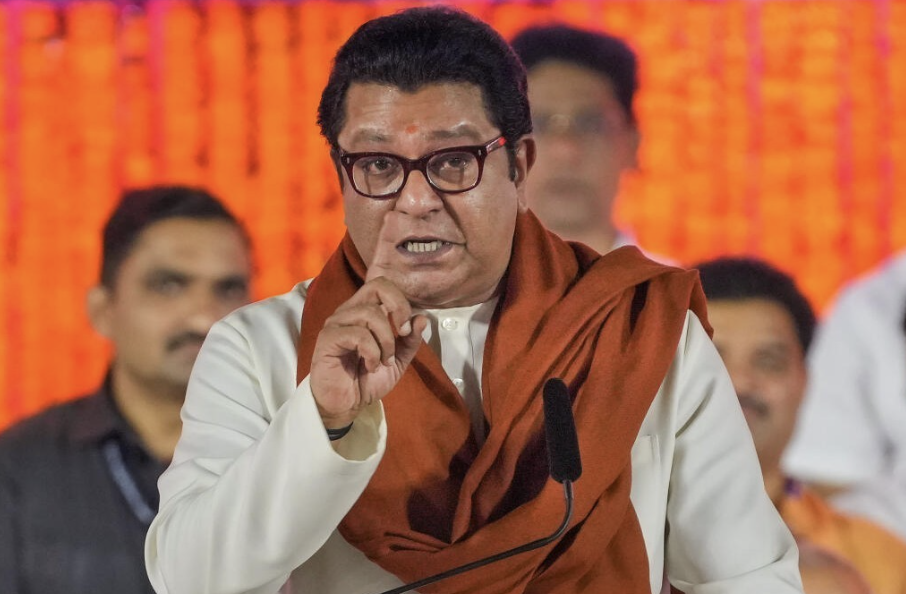
By Vishal Mishra
OPINION:-
The Indian political scene increasingly resembles the chaos of social media influencers loud, performative, and often disconnected from ground realities.
Only now, instead of YouTubers and influencers publicly challenging each other to meet-ups and “location shares,” it’s the politicians taking center stage.
The latest spat between BJP MP Nishikant Dubey and MNS chief Raj Thackeray is yet another example of how our political discourse is deteriorating into personal threats masked as regional pride.
Nishikant Dubey’s “patak patak ke maarenge” warning aimed at the Thackerays didn’t stay unanswered for long. Raj Thackeray responded with his signature aggression, daring Dubey to visit Mumbai and threatening to “dubo dubo ke maarenge” drown him in the Mumbai sea.
Somewhere in this verbal slugfest, Maharashtra versus Bihar, Marathi versus Hindi, and regional pride versus national language debates got tangled.
But in the middle of this noise, who is talking about the people?
मैंने राज ठाकरे को हिंदी सिखा दी ? https://t.co/5YpM1SrzDt
— Dr Nishikant Dubey (@nishikant_dubey) July 18, 2025
When Will Politicians Prioritize Roads Over Rhetoric?
As a common citizen, one has to ask when will politicians stop offering GPS coordinates for fights and instead provide us with the map to development?
Whether it’s Bihar, Maharashtra, or any other state, the average Indian wants better roads, uninterrupted electricity, clean water, quality education, and healthcare.
Instead, what we get are chest-thumping speeches and thinly-veiled threats.
It’s a sad reflection of our times that leaders who should ideally be setting examples of civility and governance are publicly engaging in this gladiatorial verbal combat.
We are being served language politics on a platter while our potholes deepen and our cities drown in monsoons.
Is it too much to ask that instead of ‘come to Mumbai’ or ‘come to Bihar,’ these leaders issue calls to ‘come see the progress we’ve made’?
The Language Debate: Pride or Political Tool?
Let’s be clear: language pride is important. Every region has a right to protect its linguistic and cultural heritage. Raj Thackeray’s demand that Marathi be respected in Maharashtra echoes the sentiments many have in states like Karnataka or Tamil Nadu.
But when that pride transforms into divisive rhetoric or threats of violence, it loses legitimacy.
The public is not against the promotion of regional languages. What people resist is the political exploitation of language as a convenient distraction from governance failures.
When policies falter, when employment figures look grim, and when infrastructure is crumbling, language politics becomes the easiest smokescreen.
Political Showdowns, Public Showpiece?
It’s ironic that while our political leaders exchange aggressive challenges about physical confrontations, citizens are still waiting for a challenge any challenge taken up for our crumbling roads, collapsing bridges, or the alarming unemployment rates.
Are these leaders so disconnected from reality that they believe the common man is more interested in their bravado than their work?
In Maharashtra, the public outrage over making Hindi mandatory in schools shows that people are aware of and protective about their linguistic identity.
But that same public also wants their kids to study in safe, well-equipped schools, not just debate which language should dominate the curriculum.
Conclusion: Development Has No Language
Whether it is Dubey in Bihar or Thackeray in Maharashtra, citizens expect action, not just articulation. Development, after all, has no language it speaks in roads that don’t cave in during rains, hospitals that don’t turn away patients, and schools that don’t crumble under political interference.
Our politicians need to realize that real power is not in ‘patak patak ke marenge’ or ‘dubo dubo ke marenge.’
Real power lies in building a state so strong, so developed, that it doesn’t need threats to defend its pride. The people are watching and they are waiting for that power to be exercised in the right direction.